Why India’s Freight Trains Need Specialized Pantographs
Lesezeit: 3 Minute(n)
Datum: 17. August 2026
Mobility
Ansprechpartner
Daniel Pfeffer
Head of SBA Traction
Kontakt aufnehmen
Power transmission for heavy rail and high speed
High speeds, long distances and demanding operating conditions place special requirements on power transmission. Discover Schunk Transit Systems solutions for reliable and efficient rail systems in heavy rail and high-speed applications.
Higher overhead lines, higher demands: How high-reach pantographs enable reliable current collection.
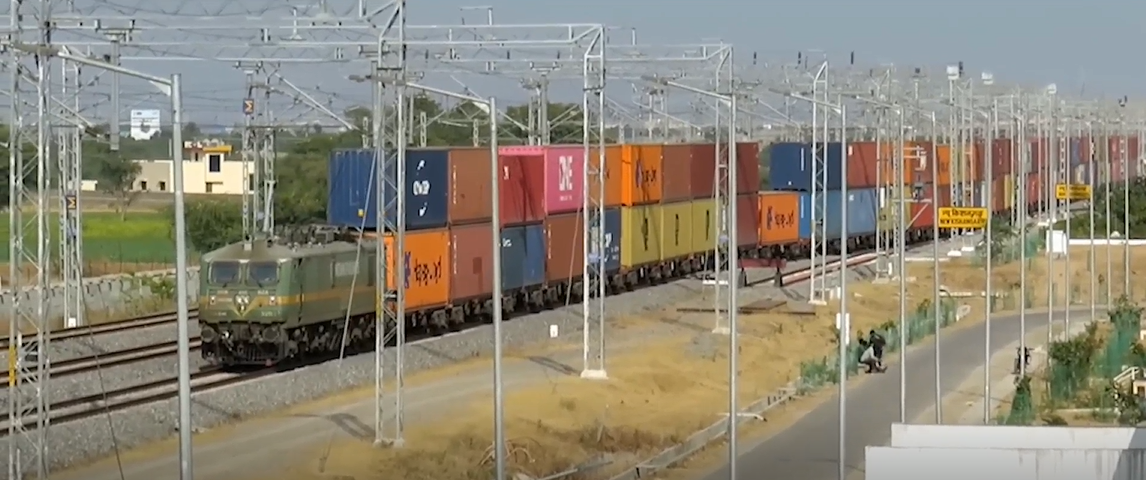
Anyone seeing a freight train in India for the first time may have to look twice. Many trains carry containers stacked two high – known as double-stack container trains. This allows more freight to move on each train, making rail freight more efficient.
To provide enough clearance for the stacked containers, the overhead contact lines are installed significantly higher than on most European rail networks. The locomotive itself, however, is not taller. That means the current collector on the vehicle has to bridge a much greater distance to reach the overhead line. And that is where the engineering challenge begins.
More Height Doesn’t Simply Mean a Bigger Pantograph
An electric train cannot operate without a current collector. The current collector – also known as a pantograph – maintains contact with the overhead line while the train is moving and supplies the vehicle with electrical power. It may sound straightforward, but the engineering behind it is anything but simple.
The contact strips mounted on the pantograph must maintain a precisely defined contact force against the overhead line. If the force is too low, contact can be lost temporarily, potentially causing arcing. If it is too high, wear and mechanical stress on both the pantograph and the overhead contact line increase.
The higher the overhead line, the more demanding this becomes. As the pantograph’s operating height increases, the mechanical and aerodynamic forces acting on it change as well. Add the higher speeds for which modern trains in India are designed, and simply scaling up an existing current collector is no longer an option. Reach, mechanical design, aerodynamics and contact behavior have to be considered together from the start.
What Is a High-Reach Pantograph?
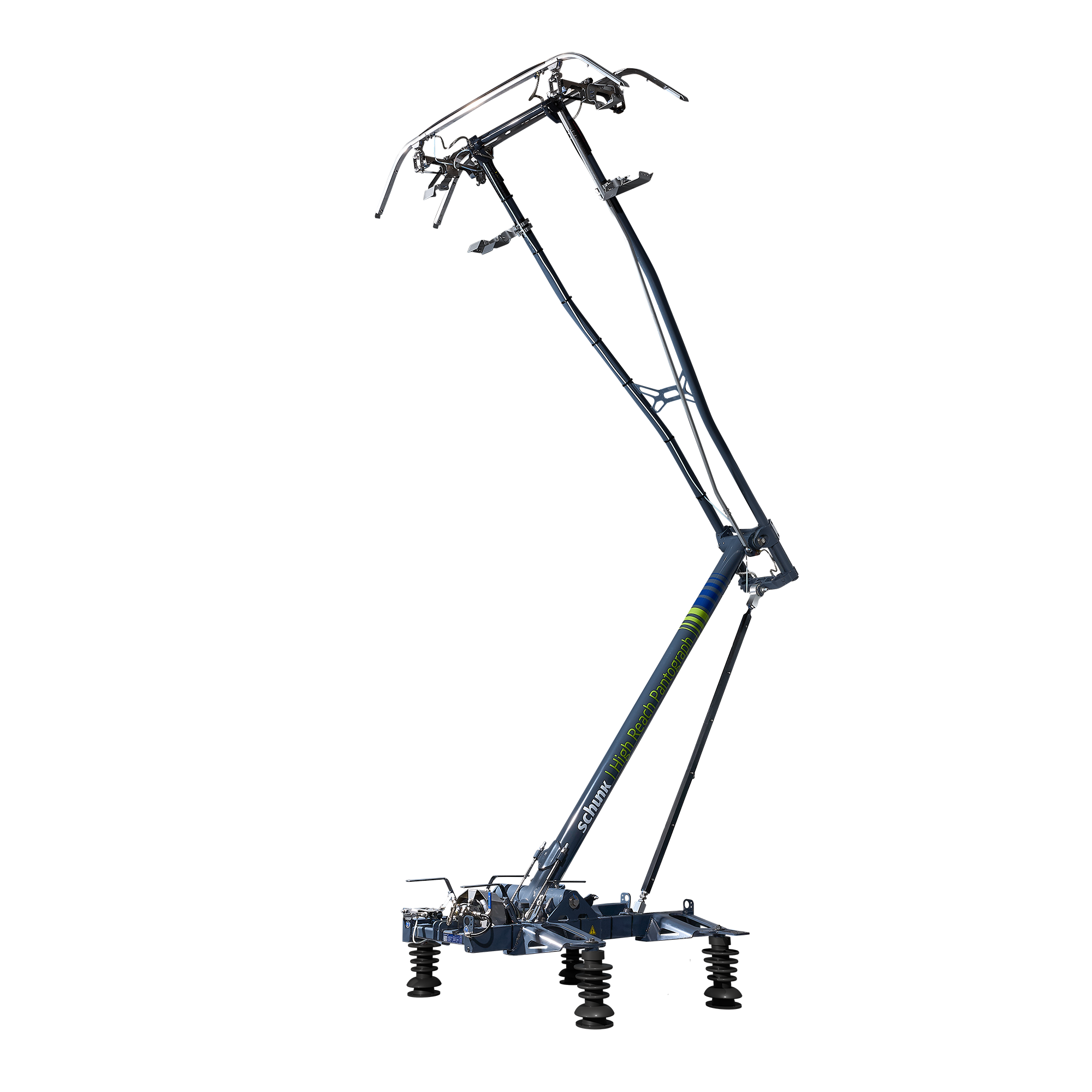
A high-reach pantograph is a current collector specifically designed for rail lines with exceptionally high overhead contact lines. It bridges the greater distance between the vehicle and the contact wire while maintaining stable contact across an extended operating range – even at speeds of up to 200 km/h (124 mph).
Extended reach alone is not enough. What matters is how the mechanical design, aerodynamics and pneumatically controlled contact force work together. Only when these factors are properly balanced can the pantograph collect current reliably from the overhead line at greater operating heights.
When Proven Designs Reach Their Limits
Pantographs that have performed reliably for many years are not automatically suited to changing operating conditions. As overhead line heights and train speeds increase, so do the demands placed on the current collector.
That is why Schunk developed a new generation of high-reach pantographs. The design is engineered to bridge the greater distance between the vehicle and the overhead contact line while meeting the demands of higher-speed operation.
The development process combined extensive simulations, multiple prototypes and experience gained from previous generations of pantographs. This allowed the new design to be evaluated under different operating conditions and refined step by step. Testing under real-world operating conditions followed, leading ultimately to approval.
Conclusion: Current Collection for Unique Operating Requirements
Double-stack freight trains create a distinct engineering challenge: The overhead contact line is positioned significantly higher, while the pantograph remains mounted on a vehicle of conventional height. It therefore has to bridge a greater distance while continuing to maintain reliable contact with the overhead line.
The high-reach pantograph was developed for exactly this purpose. It combines the required reach with stable overhead line contact – even at high speeds. It is a clear example of how onboard rail technology must evolve as rail infrastructure and operating conditions change.
Interested in more information?
Find relevant brochures, technical documents and further information on Schunk Transit Systems pantograph solutions for rail applications.
Learn more about Schunk’s High-Reach pantograph, its technical features and its applications for exceptionally high overhead lines and demanding operating conditions.
High speeds, long distances and demanding operating conditions place special requirements on power transmission. Discover Schunk Transit Systems solutions for reliable and efficient rail systems in heavy rail and high-speed applications.