Why Oil Quenching Remains a Challenge
Oil quenching is a widely used process in heat treatment to achieve specific mechanical properties. It is essential for many components used in industries such as bearings, gears, and fasteners.
At the same time, oil quenching introduces its own challenges. One factor that is often overlooked is how the quenching oil interacts with fixture materials.
When porous materials are used, oil can enter the material structure during quenching. During subsequent heating cycles, this oil evaporates and can lead to soot formation and contamination inside the furnace.
Over time, these effects impact process stability, maintenance effort, and overall efficiency.
Material Behavior in Oil Quenching: Key Differences
How a fixture behaves during oil quenching depends largely on its structure.
Metal Fixtures
Metal fixtures have a dense structure and do not absorb oil. As a result, they are not affected by oil infiltration or related soot formation.
That said, metal fixtures may introduce other constraints, such as higher weight, handling challenges, deformation at high temperatures, or different thermal behavior.
Conventional CFC Materials
Carbon fiber reinforced carbon (CFC) is widely used in heat treatment because of its thermal performance, low weight, and excellent dimensional stability at high temperatures.
In oil quenching, however, its open porosity becomes a drawback. Oil can penetrate the material and is released again during heating. This directly contributes to soot formation inside the furnace.
The Role of Porosity and Oil Carry-Over
Porosity plays a key role in how materials behave during oil quenching.
Oil carry-over refers to oil that is absorbed by porous materials during quenching and released again in subsequent thermal processes.
In porous materials:
Over time, this leads to:
Durafire® Dense: A Material Designed for Oil Quenching
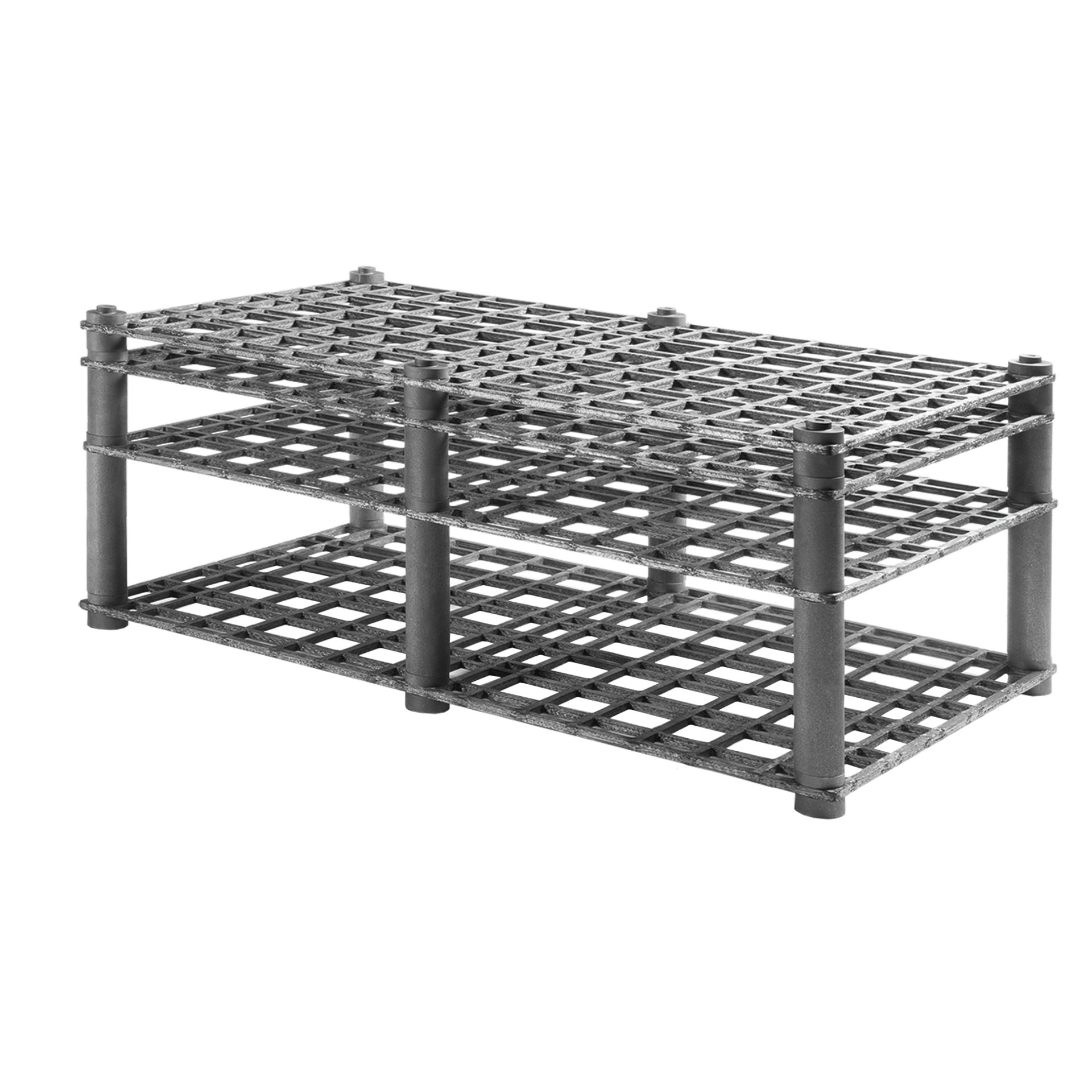
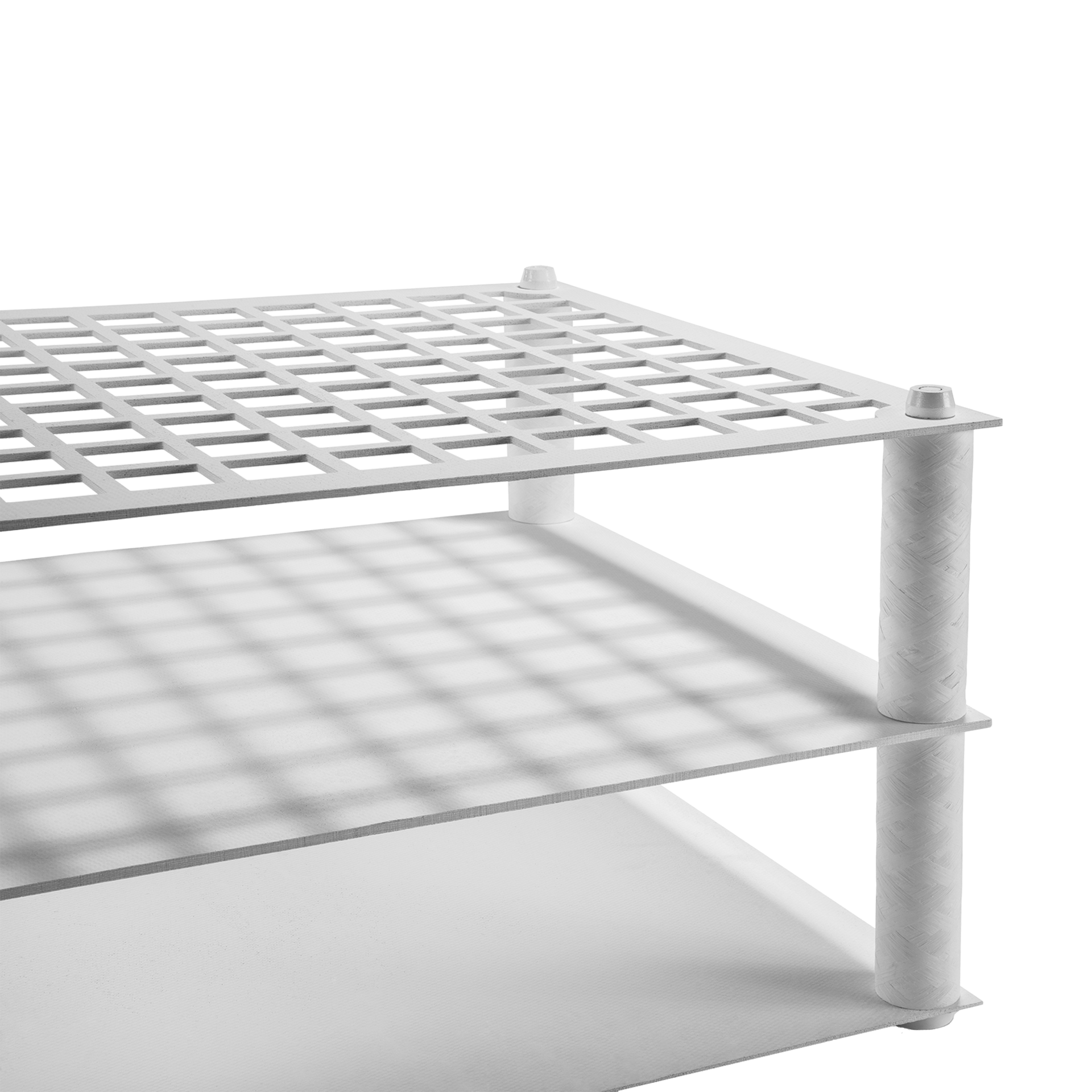
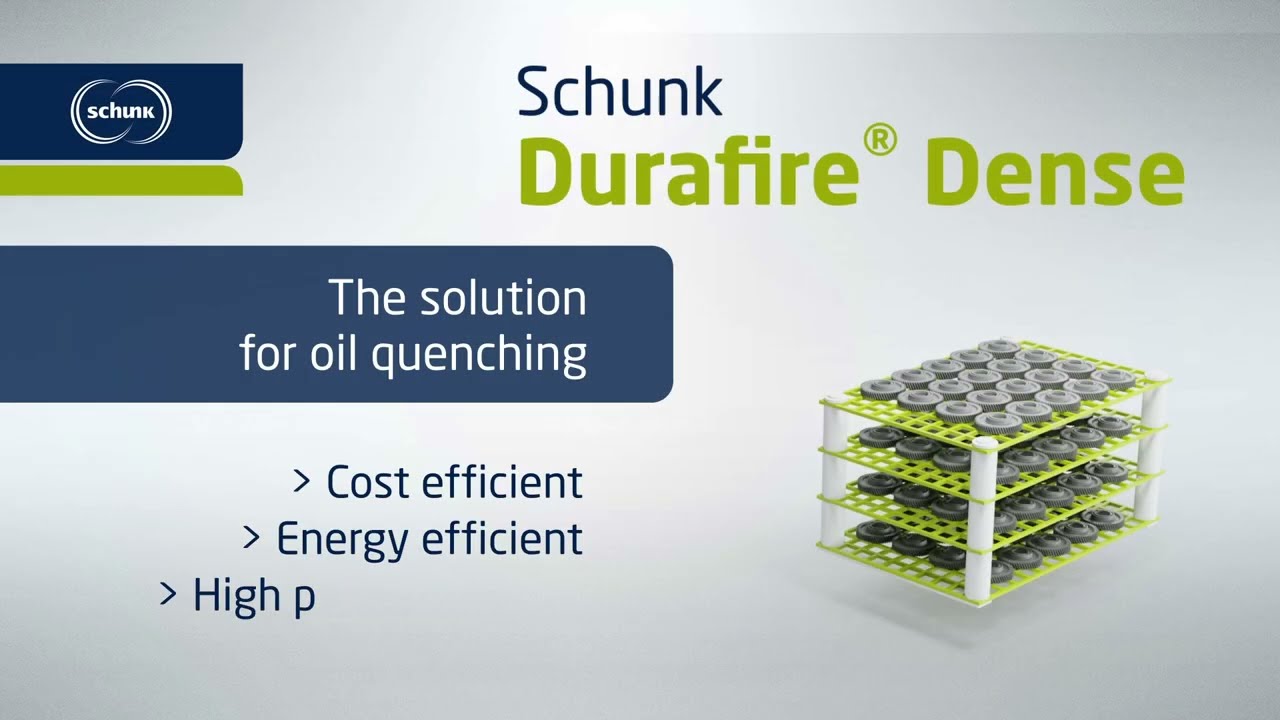
Durafire® Dense from Schunk was developed specifically for oil quenching applications.
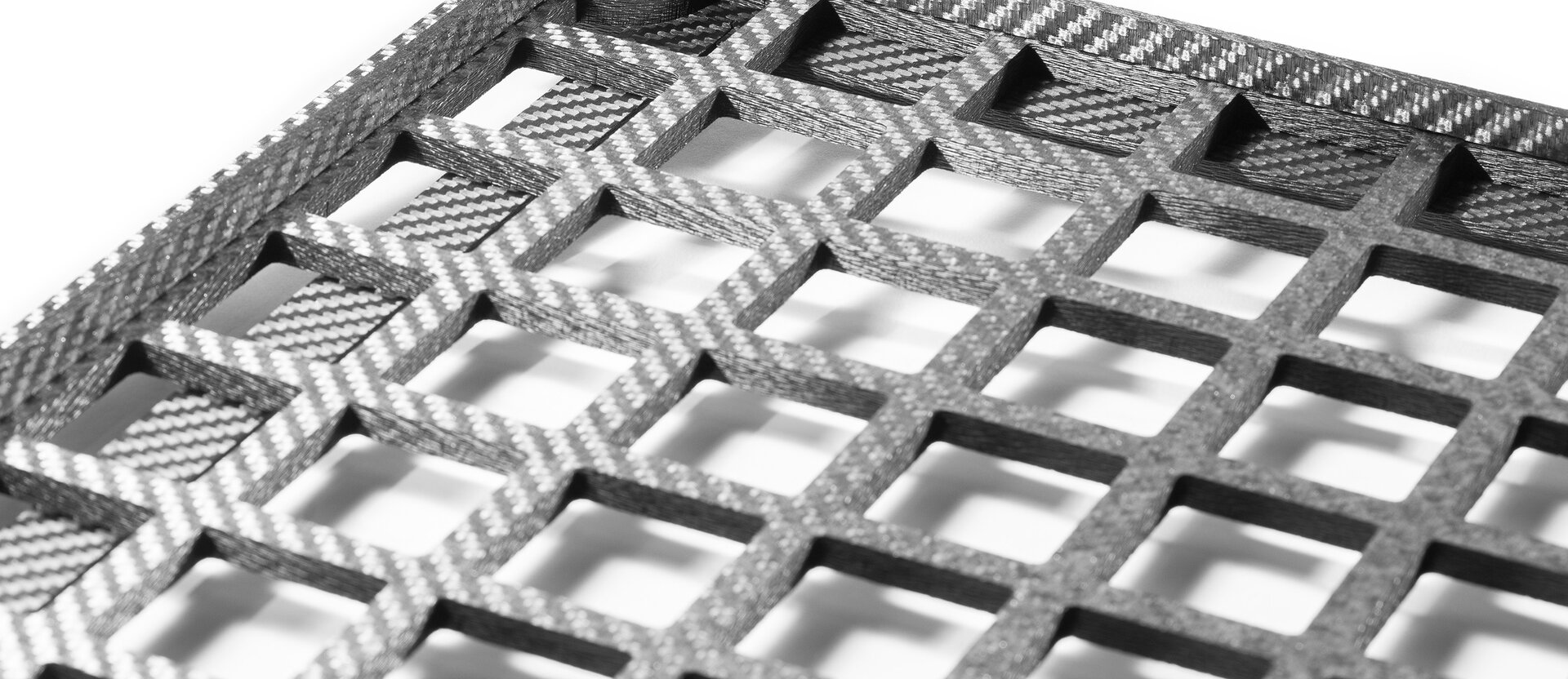
The material is based on CFC but features a structure where the porosity is largely filled. Compared to conventional CFC with open porosity, this significantly limits oil ingress during quenching and reduces oil carry-over into subsequent process steps.
Key Effects
These improvements are directly linked to the reduced porosity of the material.
What This Means for Heat Treatment Operations
Material selection has a direct impact on process performance.
Using low-porosity materials such as Durafire® Dense can help:
These benefits become especially relevant in high-volume or continuous production.
When to Consider Low-Porosity Materials
Durafire® Dense is a strong fit for:
It is not intended to replace all materials across the board, but to address specific challenges in oil quenching.
Conclusion: Material Choice Matters
In oil quenching, the choice of fixture material directly affects process behavior.
Understanding these differences helps improve process stability and long-term performance.
FAQ: Oil Quenching and Material Selection
What causes soot formation in oil quenching?
Soot formation is typically caused when oil enters porous materials such as conventional CFC during quenching. During subsequent heating, the absorbed oil evaporates and leaves residues inside the furnace.
Do metal fixtures absorb oil during quenching?
No. Metal fixtures have a dense structure and do not absorb oil. As a result, they are not affected by oil infiltration or the soot formation associated with it. However, they may have other limitations, such as higher weight or different thermal behavior.
Why is porosity important in heat treatment fixtures?
Porosity determines whether oil can enter a material during quenching. In porous materials, oil absorption can lead to contamination, soot formation, and reduced process stability over time.
What is oil carry-over in heat treatment?
Oil carry-over refers to oil that is absorbed by porous materials during quenching and released again in subsequent thermal processes. This can contribute to contamination and soot formation inside the furnace.
What is the advantage of low-porosity CFC materials?
Low-porosity materials such as Durafire® Dense limit oil ingress into the material. This reduces oil carry-over, lowers the risk of soot formation, and supports cleaner and more stable furnace conditions.
When should Durafire® Dense be used?
Durafire® Dense is designed for oil quenching applications, particularly in inert gas chamber furnaces where oil-related contamination and soot formation are recurring challenges.
Interested in more information?
Here you will find further information on Durafire® Dense and on material solutions for demanding heat treatment and oil quenching processes.
Download now!
Find out more about Durafire® Dense, the benefits of a low-porosity CFC structure and how it contributes to cleaner furnace conditions, reduced soot formation and greater process stability.
Finde out more!