ende

Go back
Together with Zeiss, Schunk drives sustainability forward

Saving 500 tons of carbon dioxide with 3D printing of ceramics

Reading time: 2 Minute(s)
Date: March 14, 2023
Technical Ceramics & 3D Printing

The challenge: very large structural components

When you need structural components made of ceramics that are as large as a human being, it can become a challenge. A challenge that was also faced by the Zeiss company. That's because the conventional manufacturing process, in which silicon carbide powder is pressed into a block and then milled, presented a major technical hurdle here. "A new idea was needed," says Stefan Unger, who is responsible for supply chain sustainability at Zeiss.

The challenge: very large structural components

Printing diamond-hard and complex ceramics with IntrinSiC.

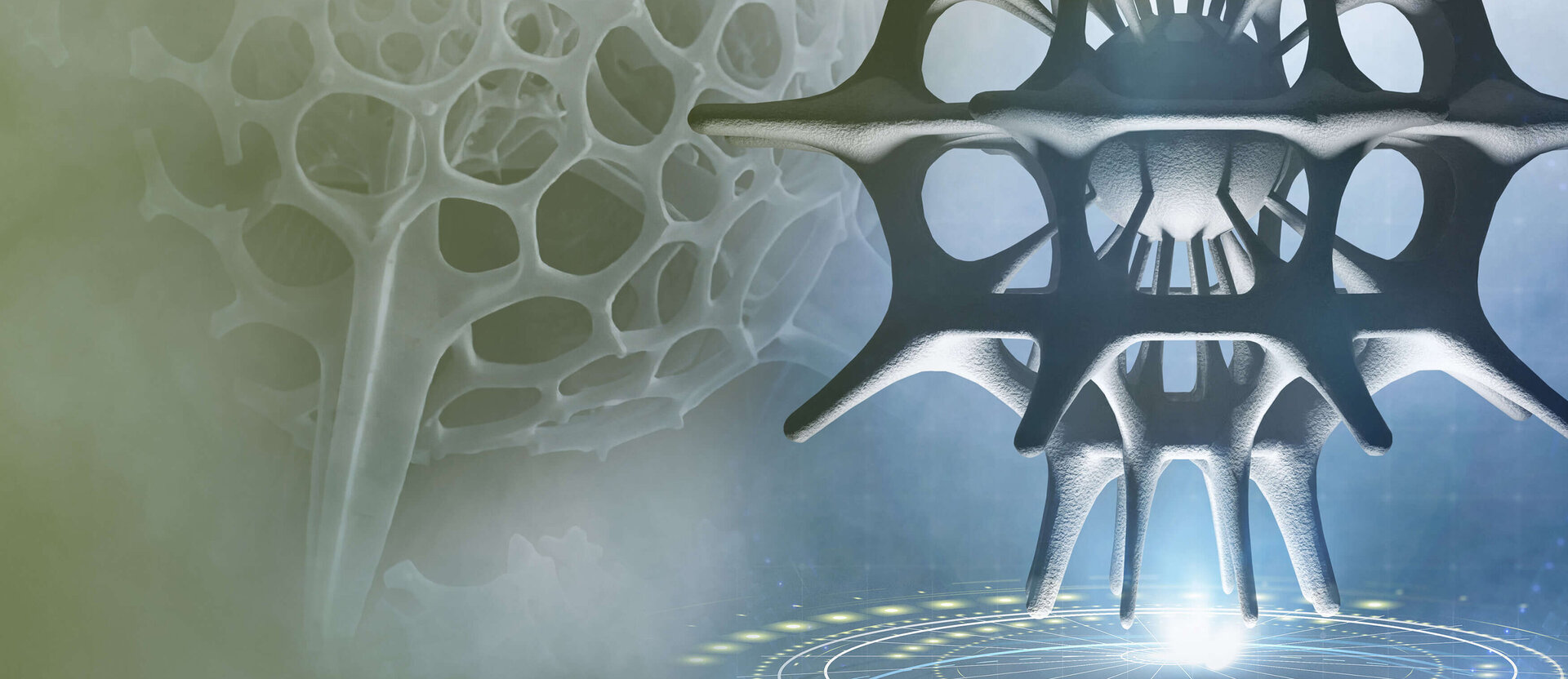
And this is exactly where Schunk came into play. Back in 2014, the experts at Schunk Technical Ceramics had developed a technology for processing silicon carbide - one of the hardest and most heat-resistant materials of all - using the 3D printing process. Called IntrinSiC, the process can produce components that were previously impossible with ceramics due to their complexity and size. The perfect method for Zeiss.

Collaboration pays off

"Zeiss was the ideal partner for us to further develop 3D printing," says Dr. Lars Schnetter, Managing Director of Schunk Ingenieurkeramik. The production of ceramic components using 3D printing is more flexible, more cost-effective, more resource-efficient and less prone to errors than conventional processes. "We were initially a bit skeptical if a supplier could even meet our demanding requirements with a printing process," reveals Stefan Unger. But the patience and trust of both parties paid off in the end.

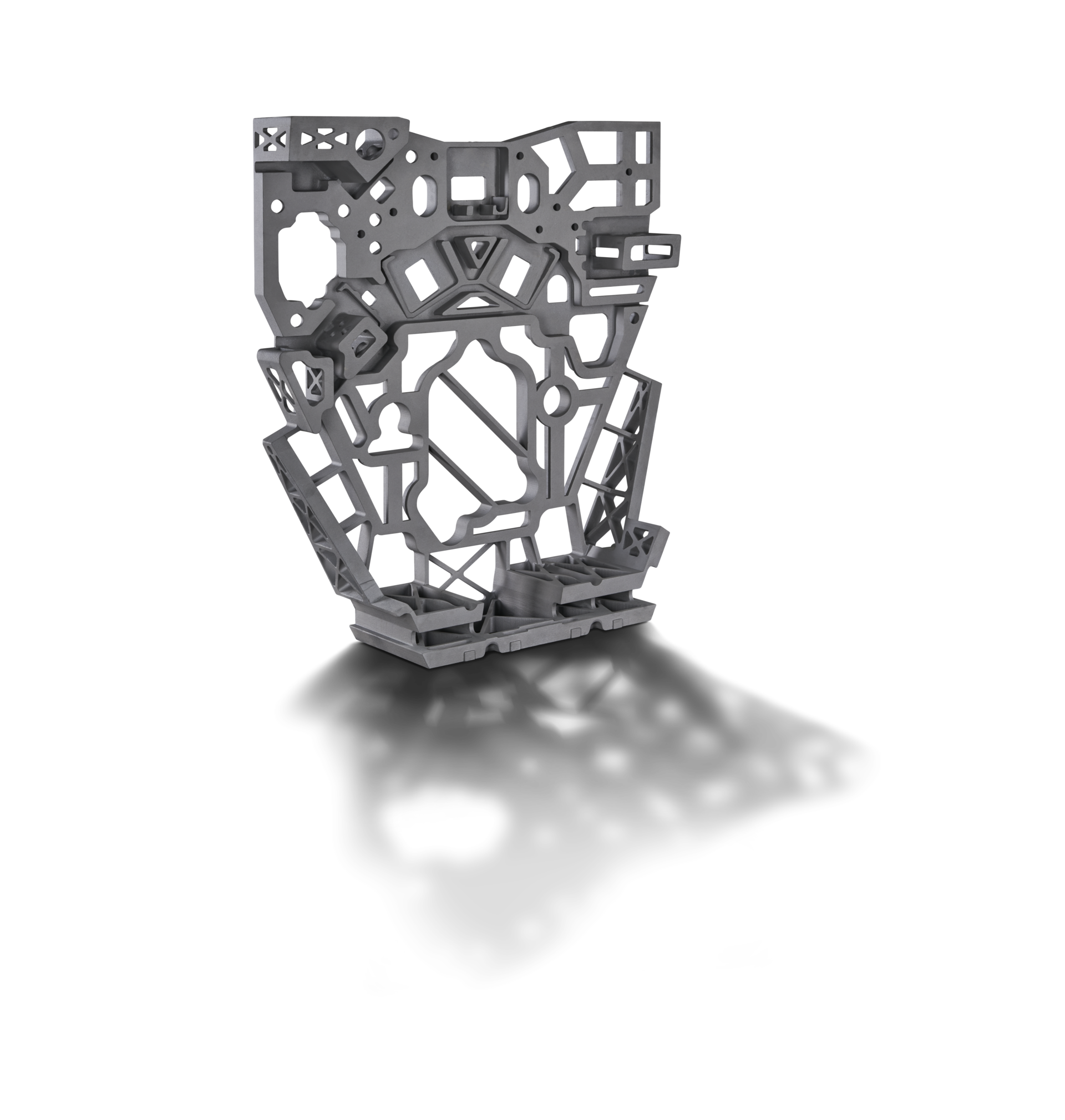
3D printed component made of technical ceramics for space applications from Schunk
Whether in precision mechanical engineering, metrology or aerospace, machine components made of IntrinSiC are convincing wherever minimized weight, increased precision and enhanced load-bearing capacity are required.

Sustainable technology with great potential

Schunk Ingenieurkeramik and Zeiss have been jointly driving technological innovations since 2008, and with it another topic: sustainability. After all, 3D printing not only saves time, material and money:

"By manufacturing ceramic components using the 3D printing process, Schunk could save around 500 tons of CO2 in 2022," confirms Schnetter."

Dr. Lars Schnetter - Managing Director at Schunk Ingenieurkeramik GmbH

And Unger adds, "This technology has major potential since it can be transferred to other fields. What’s more, this is just the start."


 

Interested in more information?
→ Find all relevant brochures and documents on the topic here. Download now!

Subscribe now and never miss a thing!

Subscribe now

More blog articles

To overview
February 2, 2026

RECOSiC: How Recycled Silicon Carbide Becomes a High-Performance Raw Material

Silicon carbide (SiC) plays a key role in many high-tech industries – from semiconductors and solar systems to technical ceramics and abrasives. Its exceptional hardness and thermal resistance make it an essential material for demanding industrial applications. However, the downside is significant: conventional SiC production is highly energy-intensive and has a major carbon footprint. Producing just one ton of SiC can emit up to 4.2 tons of CO₂, driven by both chemical reactions and the electricity required for production. In a global market increasingly focused on sustainability and resource efficiency, this is a growing concern. This is exactly where the RECOSiC process comes in. Developed by ESK-SIC GmbH, a company of the Schunk Group, in partnership with Fraunhofer IKTS, RECOSiC enables the recovery of high-purity SiC from production residues – offering a significantly improved carbon balance and supporting true circular economy principles in industrial materials.

Semiconductors
Technical Ceramics & 3D Printing
The ISS floating in space, with our beautiful Earth in the background
November 17, 2025

3D-Printed Ceramic Satellite Mirrors: Schunk’s Contribution to Space Optics

Space is a tough environment. Satellite components must withstand extreme temperature changes, vibrations during launch, and function reliably for years without maintenance. This is where silicon carbide (SiC) shows its strengths.  It offers low density, high stiffness, and remains thermally stable under changing conditions. Silicon carbide can also be processed to achieve highly precise optical surfaces, making it the ideal material for applications like satellite mirrors and structural parts in optical systems. 

Aerospace
Technical Ceramics & 3D Printing