
Latent Heat Carbon from Schunk Carbon Technology

Thermal runaway prevention – Latent Heat Carbon protects battery modules

Latent Heat Carbon (LHC) is a composite material made of graphite and a phase-change material (PCM). It combines the high heat storage capacity of phase-change materials with the thermal conductivity of graphite—and, through this combination, increases thermal conductivity by up to 150 times compared to pure PCM. The result is a lightweight, passive material that quickly absorbs, stores, and evenly distributes thermal peak loads—without external energy, without moving parts, and without maintenance.

The Operating Principle—Phase Change as a Protection Mechanism

Phase-change materials absorb large amounts of thermal energy—known as latent heat—during the transition from solid to liquid without the temperature rising further. This effect can be precisely controlled: The melting point of the PCM determines the temperature at which protection becomes active. For LHC70, this melting point is 70 °C, and the enthalpy of fusion is 195 J/g. The specific heat capacity is 1.7 J/g·K at a density of just 0.9 g/cm³—which makes Latent Heat Carbon particularly attractive for weight-critical mobile applications. 
By integrating the PCM into a highly conductive graphite matrix, the absorbed heat is not only stored locally but is also rapidly distributed throughout the entire component—with a thermal conductivity of 15 W/m·K in the x and y directions. This prevents heat from accumulating at a single point and spreading to adjacent cells.

Proven Effective – Nail Penetration Test

Schunk Carbon Technology has demonstrated the effectiveness of Latent Heat Carbon cell holders for cylindrical cells in nail penetration tests. In this standard test designed to simulate thermal runaway, a fully charged 18650-type NMC cell is mechanically penetrated by a nail, triggering a thermal reaction in the cell. 
The result: Only the penetrated cell caught fire. The LHC70 cell holder absorbed the released thermal energy so effectively that no adjacent cell was adversely affected. The fire was extinguished after a few seconds—and the thermal event was completely contained after just 11 seconds.

Two Functions—One Component

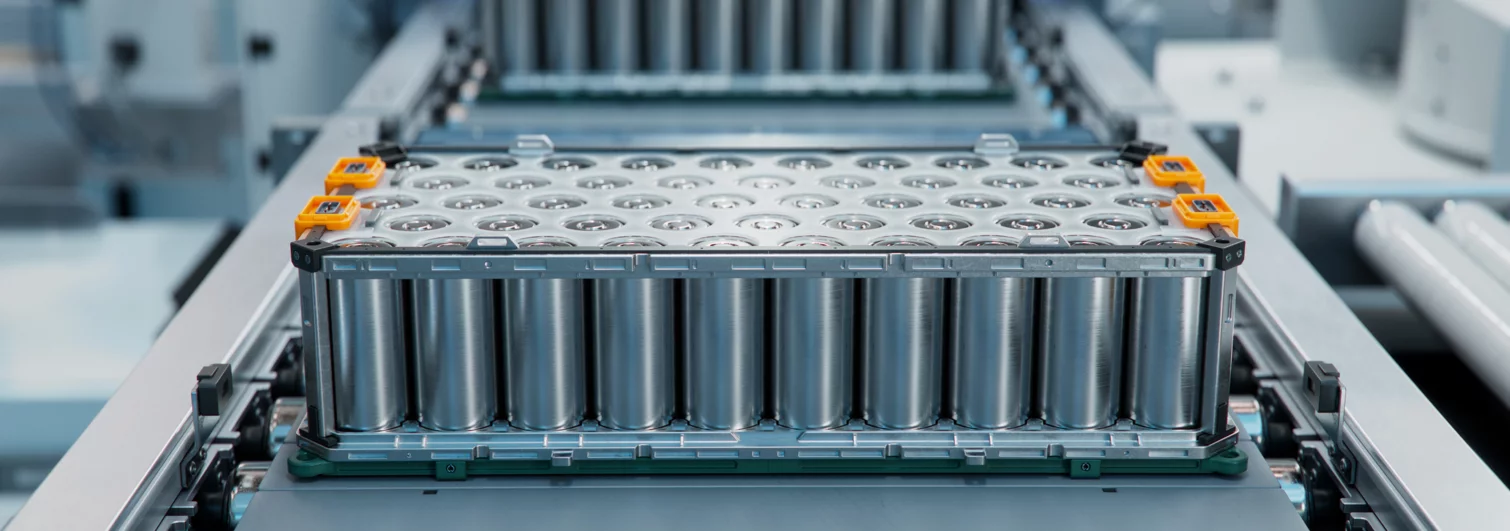
The LHC cell holder for cylindrical Li-ion battery cells fulfills two tasks simultaneously within the battery module. During normal operation, it ensures even temperature distribution across the entire module—the high thermal conductivity of the graphite matrix prevents local temperature spikes that would accelerate cell aging. In the event of a fault, it acts as a thermal barrier: The PCM absorbs the energy from the affected cell before it can spread to neighboring cells. 
Schunk Carbon Technology manufactures Latent Heat Carbon in customer-specific geometries—tailored to the respective cell size, module architecture, and requirements.

Our Products - Latent Heat Carbon cell holders
Brochure: Aluminium Graphite Composites

Ideal materials for heat dissipation in electronics and semiconductor
back-end processing

Add
Brochure: Aluminium Graphite Composites

Aluminum Graphite Soldering Jigs & Fixtures: The material of choice to achieve a higher production yield
and throughput

Add
Brochure: Latent Heat Carbon

Graphite-based thermal runaway prevention systems for transformation, storage
and release of latent heat

Add
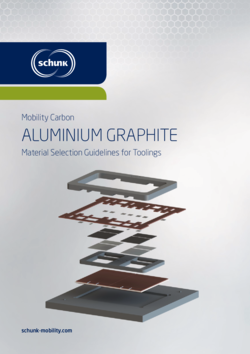
Brochure: Material Selection Guide

Material selection guide for toolings: aluminium graphite

Add

Downloads

4 Files online

Your benefits with Latent Heat Carbon from Schunk

  • Passive protection—no energy consumption, no external systems, no maintenance 
  • Up to 150 times higher thermal conductivity than pure PCM due to graphite integration 
  • Proven effectiveness: Thermal runaway remains confined to the affected cell—as demonstrated by nail penetration tests 
  • Uniform temperature distribution during normal operation – protects cells from accelerated aging 
  • Lightweight at just 0.9 g/cm³ – particularly advantageous for mobile applications 
  • Custom geometries for various cell formats and modular architectures
Any questions?

Let us advise you

Contact us for innovative thermal runaway prevention with Latent Heat Carbon—for optimal processes and maximum quality! 

Get in touch